


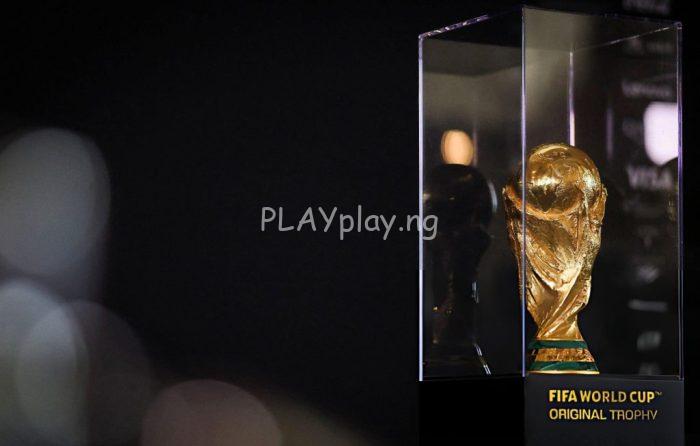
When Spain captain Rodri lifted the FIFA World Cup trophy into the New Jersey sky, the celebrations marked more than the crowning of a new world champion.
Behind the confetti, fireworks and emotional celebrations lay another staggering victory; one measured not in goals, but in billions of dollars.
The 2026 FIFA World Cup did not simply rewrite football history on the pitch. It shattered every financial record the sport had ever known.
From unprecedented television deals and sold-out stadiums to soaring ticket prices and an expanded 48-team format, FIFA walked away from the biggest tournament in football history with a staggering $9 billion in revenue.
It was a World Cup where history wasn’t only made by players, it was also made in the balance sheets.
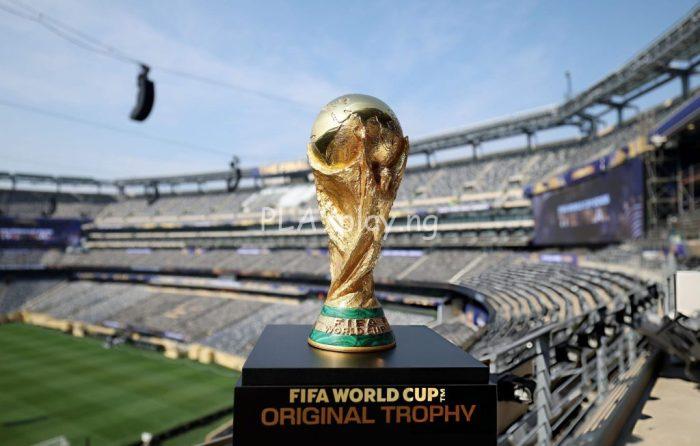
The Biggest World Cup Ever Became the Richest
The 2026 edition rewrote football’s financial playbook.
For the first time, 48 nations competed instead of 32.
That expansion increased the number of matches from 64 to 104, stretching the tournament across six weeks and creating significantly more opportunities for broadcasters, sponsors and advertisers.
More matches meant:
- More television content to sell.
- More tickets available for supporters.
- More sponsorship inventory.
- More global exposure.
- More commercial partnerships.
The result was staggering.
FIFA expects the tournament to generate more than $9 billion in revenue, making it comfortably the most lucrative sporting event ever organized.
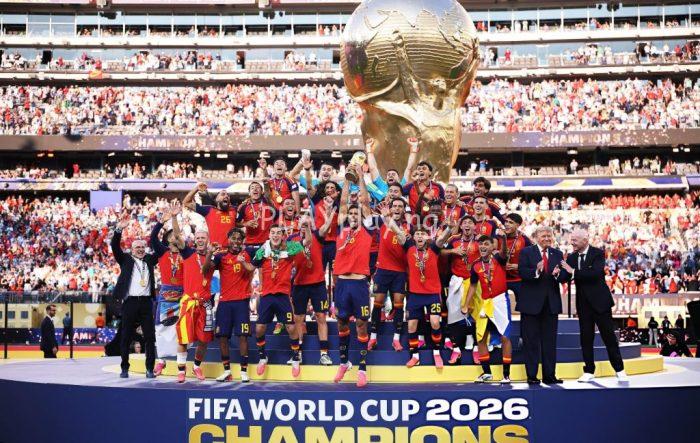
Spain Lifted the Trophy but FIFA Collected the Biggest Prize
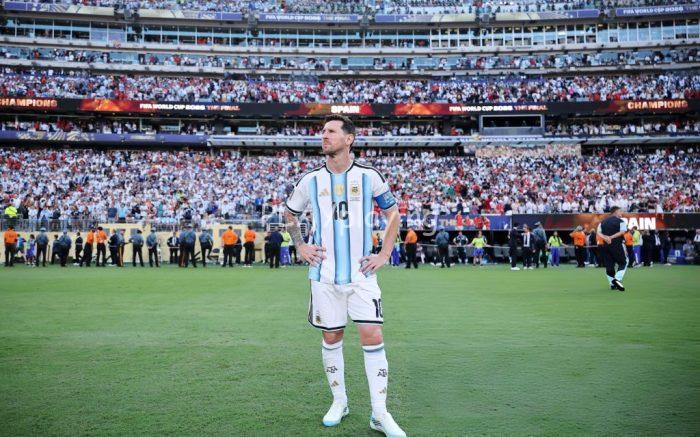
The football world will forever remember Spain’s dramatic 1-0 extra-time victory over Argentina in the final.
Barcelona forward, Ferran Torres scored the decisive goal to hand La Roja their second FIFA World Cup title, denying Lionel Messi and Argentina back-to-back world championships.
The final itself carried plenty of drama.
Argentina were reduced to ten men after Enzo Fernández received a second yellow card following a challenge on Spanish defender Pau Cubarsí, before Torres struck what proved to be the winning goal in extra time.
Off the pitch, the spectacle was unlike anything football had witnessed before.
For the first time in World Cup history, fans were treated to a halftime show, featuring global music icons including Madonna, Justin Bieber, BTS, and Shakira.
The entertainment extravaganza extended halftime to more than 27 minutes, with many questioning whether football’s biggest stage needed such a Super Bowl-style production.
Regardless of the criticism, FIFA’s commercial gamble paid off.
Spain Hit the Jackpot After World Cup Glory
Spain’s dramatic extra-time victory over Argentina in the World Cup final did not only earn them football immortality.
It also delivered the biggest winners’ cheque in tournament history.
La Roja received $51 million (about N70.38 billion) in performance prize money after defeating Argentina 1-0 in the final.
The runners-up, Argentina, collected $34 million (about N46.92 billion) after another remarkable World Cup campaign that ended one game short of retaining their crown.
England’s thrilling 6-4 victory over France in the third-place playoff secured another impressive payday.
The Three Lions received $30 million (about N41.40 billion) for finishing third.
France, despite reaching the semifinals, earned $28 million (about N38.64 billion) after ending the tournament in fourth place.
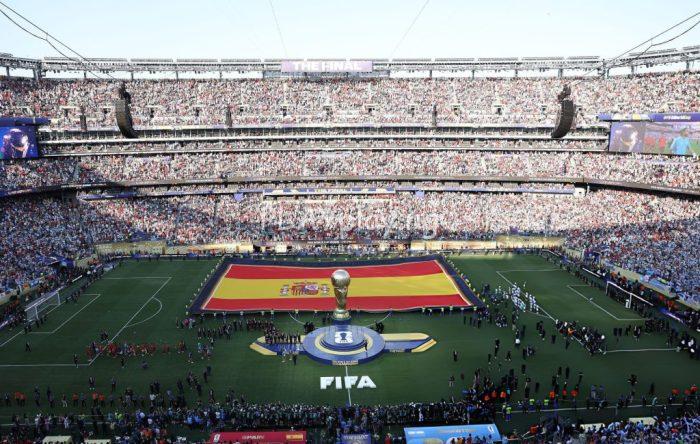
The Biggest World Cup Ever Became the Richest
The 2026 edition rewrote football’s financial playbook.
For the first time, 48 nations competed instead of 32.
That expansion increased the number of matches from 64 to 104, stretching the tournament across six weeks and creating significantly more opportunities for broadcasters, sponsors and advertisers.
More matches meant:
- More television content to sell.
- More tickets available for supporters.
- More sponsorship inventory.
- More global exposure.
- More commercial partnerships.
The result was staggering.
FIFA expects the tournament to generate more than $9 billion in revenue, making it comfortably the most lucrative sporting event ever organized.
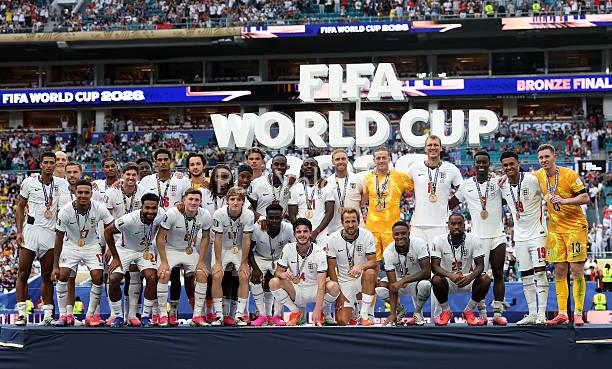
Every Knockout Stage Came With Bigger Rewards
Unlike previous editions, every step deeper into the competition came with significantly increased financial rewards.
The performance-based prize money was distributed as follows:
- Champions (Spain): $51 million
- Runners-up (Argentina): $34 million
- Third place (England): $30 million
- Fourth place (France): $28 million
- Quarter-finalists: $20 million each
- Round of 16 teams: $16 million each
- Round of 32 teams: $12 million each
- Group-stage teams: $10 million each
The figures almost doubled those awarded during the 2022 FIFA World Cup in Qatar, reflecting the commercial success of the expanded tournament.
Every Nation Went Home Richer
Even countries eliminated during the group stage left North America with substantial financial rewards.
Every one of the 48 qualified nations received:
- $10 million simply for qualifying and competing.
- $2.5 million in preparation funding to cover training camps, travel and logistical expenses before the tournament.
That guaranteed every participating federation a minimum payment of $12.5 million (about N17.25 billion) regardless of results.
Beyond those payments, FIFA also provided extensive logistical support throughout the competition.
The world football governing body covered business-class flights for official delegations, accommodation for 50-member squads, domestic transportation within host nations and dedicated equipment transport throughout the tournament.
Additional financial support pushed FIFA’s total contribution to participating countries to a record $871 million.
Tickets Became Football’s Hottest Commodity
One of FIFA’s biggest financial successes came from ticket sales.
Demand reached unprecedented levels throughout the tournament.
The official resale platform became one of FIFA’s fastest-growing revenue streams as supporters paid record-breaking prices to witness football history.
By the time Spain met Argentina in the final, average resale ticket prices had climbed to approximately $6,147 (about N8.48 million) per seat.
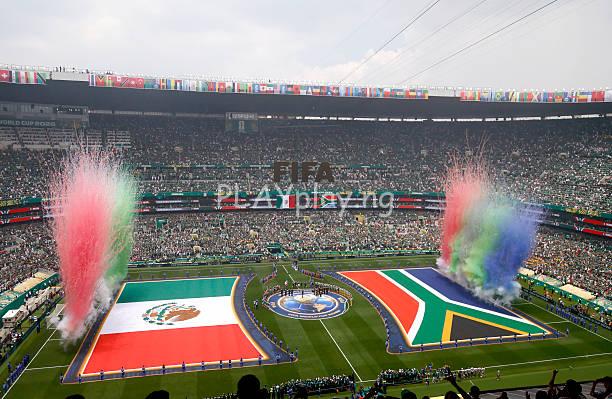
Packed stadiums across the United States, Canada and Mexico ensured the expanded tournament justified FIFA’s decision to increase the competition from 32 to 48 teams.
Fans Ignored Soaring Ticket Prices
Before kickoff, many questioned whether supporters would embrace significantly higher ticket prices.
Those fears never materialised.
Tickets ranged from $60 to well over $10,000, while the median ticket price exceeded $900.
Despite those eye-watering costs, stadiums remained virtually full throughout the tournament.
According to reports, group-stage stadium occupancy reached an astonishing 99%, proving demand for football’s biggest competition remains stronger than ever.
Antonio Di Cianni, Director of Advisory at Football Benchmark, explained why the tournament became such a commercial success.
“In the group stage, the utilization rate of stadiums was basically sold out, at 99%.”
He added:
“It showed people are willing to pay those prices.”
Broadcast Deals Cross Historic Milestones
Television rights continued to provide FIFA’s largest commercial income.
Broadcast agreements generated between $3.8 billion and $4 billion (approximately N5.24 trillion to N5.52 trillion) during the tournament.
North America alone surpassed $1 billion (about N1.38 trillion) in broadcast value, while Europe remained FIFA’s biggest television market.
Commercial partnerships also flourished.
Sponsors and marketing agreements contributed an estimated $2.8 billion to $3.8 billion (approximately N3.86 trillion to N5.24 trillion), driven by additional matches and expanded advertising opportunities created by the larger tournament.
The Money Doesn’t Go Directly to Players
Despite the eye-watering figures, FIFA does not pay prize money directly to players.
Instead, every dollar is transferred to each country’s national football federation.
How much individual players eventually receive depends entirely on bonus agreements negotiated with their respective federations before the tournament.
For example, some federations distribute most of the prize money among players, while others retain a significant portion to fund football development and future national team programmes.
FIFA World Cup Expansion Gamble Pays Off
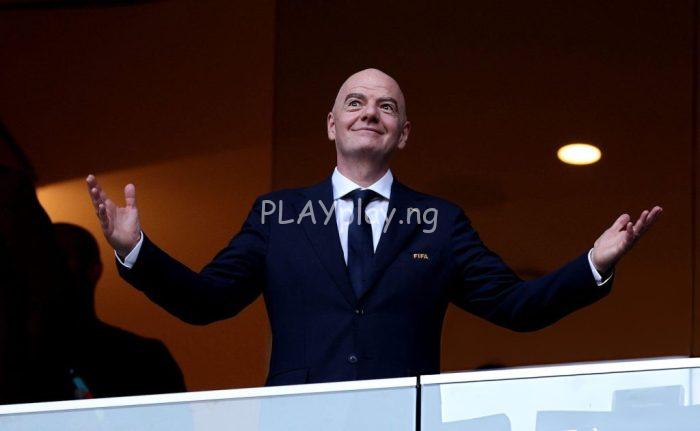
Much of the financial boom has been credited to FIFA President Gianni Infantino, whose decision to expand the World Cup has transformed the economics of international football.
The enlarged tournament not only welcomed more nations but dramatically increased FIFA’s commercial inventory.
Infantino has already hinted that the expansion may not stop there.
Speaking earlier this month, he suggested FIFA would review the possibility of increasing the competition again.
“These are all issues that we will be examining after the World Cup.”
If approved, the 2030 FIFA World Cup could feature 64 national teams, meaning nearly one-third of FIFA’s member associations would qualify for football’s biggest event.
Football finance expert Kieran Maguire, Associate Professor at the University of Liverpool, believes such a move would reshape international football forever.
“This is the opportunity for the World Cup to become the Olympics of football in the sense that it becomes open to far more nations.”
He continued:
“While the medals might be concentrated in the hands of the few, you’ve got other people who can now say that they have participated.”
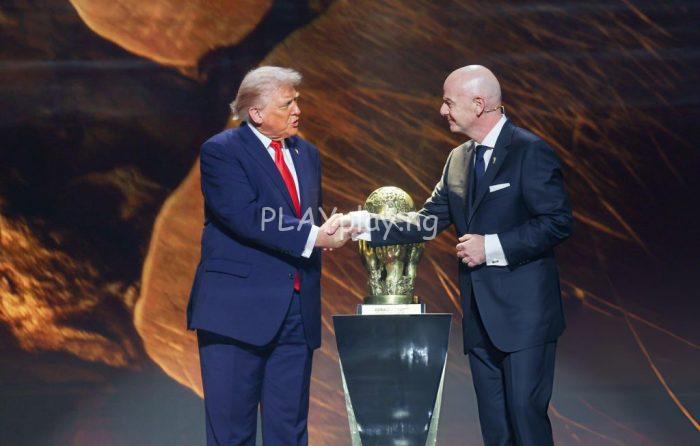
Politics and Football Collide
The tournament also attracted political attention.
United States President Donald Trump, whose country co-hosted the World Cup alongside Canada and Mexico, maintained a close relationship with FIFA President Infantino throughout the competition.
Their relationship attracted fresh scrutiny after reports emerged that Trump personally contacted Infantino to request a review of Folarin Balogun’s one-match suspension following a red card against Belgium; a decision that was later overturned.
The relationship between both men had already drawn headlines after FIFA awarded Trump its inaugural peace prize and his financial disclosure revealed that Infantino had gifted him 10 tickets worth $15,000 for last year’s FIFA Club World Cup final.
Billions set aside for football’s future
Despite the enormous profits, FIFA insists the money will continue flowing back into football.
The organization has committed $2.7 billion to its FIFA Forward 4.0 development programme between 2027 and 2030, supporting infrastructure and football projects across all 211 member associations.
The post The Richest World Cup Ever: How FIFA Shared $9 Billion Among All 48 Nations appeared first on Latest Sports News In Nigeria.